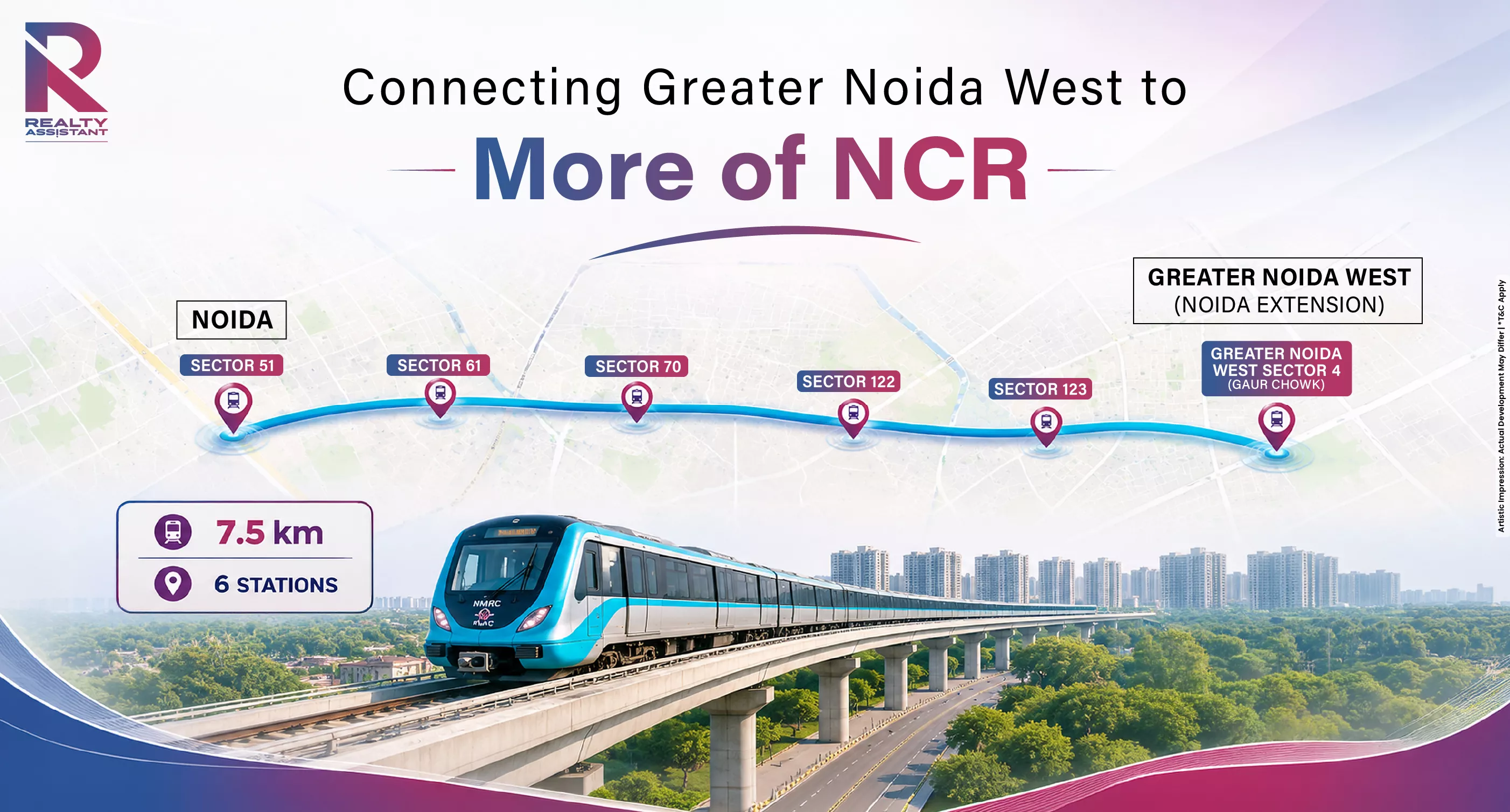
The project addresses a long-standing connectivity concern in an area where residential development has expanded. The proposed corridor is expected to connect neighbourhoods, workplaces and essential services more directly with the existing Metro network.
Noida Sector 61
Noida Sector 70
Noida Sector 122
Noida Sector 123
Greater Noida Sector 4
The Greater Noida West Metro route will bring the network closer to residential clusters around Gaur City and nearby sectors. The final station at Greater Noida Sector 4 is expected to serve the Gaur City area.
At Noida Sector 61, passengers will be able to interchange with the Delhi Metro Blue Line. This link is expected to make journeys towards other parts of Noida and Delhi more convenient, without requiring commuters to rely entirely on road transport to reach a Blue Line station.
Sector 61 Blue Line Interchange: Why It Matters
The Sector 61 Blue Line interchange is a key feature of the Noida Metro Aqua Line extension. It will connect two Metro systems and give passengers more travel options across the National Capital Region.
For Greater Noida West residents, this could simplify journeys to workplaces, railway stations and commercial centres connected to the Blue Line. The time saved will depend on interchange design, walking distances, service frequency and feeder transport.
The extension is not simply about adding five stations. Its wider value lies in linking Greater Noida West with a larger urban transport network.
Areas Expected to Benefit from the Metro Extension
According to the Ministry of Housing and Urban Affairs, the corridor is expected to improve access to residential, commercial, educational and healthcare destinations. These include Gaur City 1 and 2, Gaur City Mall, H&S Mall, Blue Sapphire Mall and commercial establishments in Greater Noida Sector 4.
On the Noida side, identified destinations include Tech Mahindra and TCL Tech offices in Sector 60, the Oil Industry Development Board in Sector 73, Delhi Public School in Sector 122 and healthcare facilities such as Kailash Hospital, Rama Hospital and Cloud9 Hospital.
The benefit for an individual society, office or institution will depend on its distance from the station and the quality of last-mile connectivity.
What Did the Prime Minister and Union Minister Say?
Prime Minister Narendra Modi welcomed the Cabinet approval in a post on X, asking: “As Noida and Greater Noida grow, why should daily commutes become longer?”
He said the extension would offer easier access to offices, schools, hospitals and commercial hubs, while helping reduce congestion and shorten journeys. His statement underlined the project's intended role in improving everyday mobility.
Union Minister Ashwini Vaishnaw also highlighted the employment potential of the corridor. Speaking after the Cabinet meeting, he said: “Many IT companies and Global Capability Centres (GCCs) are established in this area, and they will all benefit from this connectivity.”
The statements point to two objectives: improving daily travel for residents and strengthening access to the region's employment centres.
Project Cost, Construction and Completion Timeline
The approved project has an estimated cost of ₹2,390 crore. The official Cabinet briefing specifies a four-year completion period. The Noida Metro Rail Corporation has also stated that a civil construction contractor has been selected and work is expected to commence soon.
The four-year period is the stated project timeline, not a confirmed passenger opening date. Construction, station development, railway systems installation, testing and safety clearances must be completed before services can begin. The operational date, fares and train frequency have not been confirmed in the approval announcement.
Impact on Property and Connectivity in Greater Noida West
Improved Metro access can influence how homebuyers and businesses assess a location. A nearby station may make commuting easier and improve access to employment, education, healthcare and retail destinations.
The Greater Noida West Metro extension may strengthen the area's connectivity profile. However, Cabinet approval alone does not establish an immediate rise in property prices. The effect on individual locations will depend on station distance, road access, feeder services and the start of Metro operations. Buyers should assess existing connectivity and local facilities rather than base decisions solely on proposed infrastructure.
Conclusion
The approved Aqua Line extension is a major addition to the Noida-Greater Noida transport plan. Its five stations and Sector 61 Blue Line interchange are expected to improve public transport access for Greater Noida West and connect residents with more destinations.
The next milestones are the start of construction, progress against the four-year schedule and the announcement of operational arrangements. The project's long-term value will depend on how reliably it serves commuters once services begin.