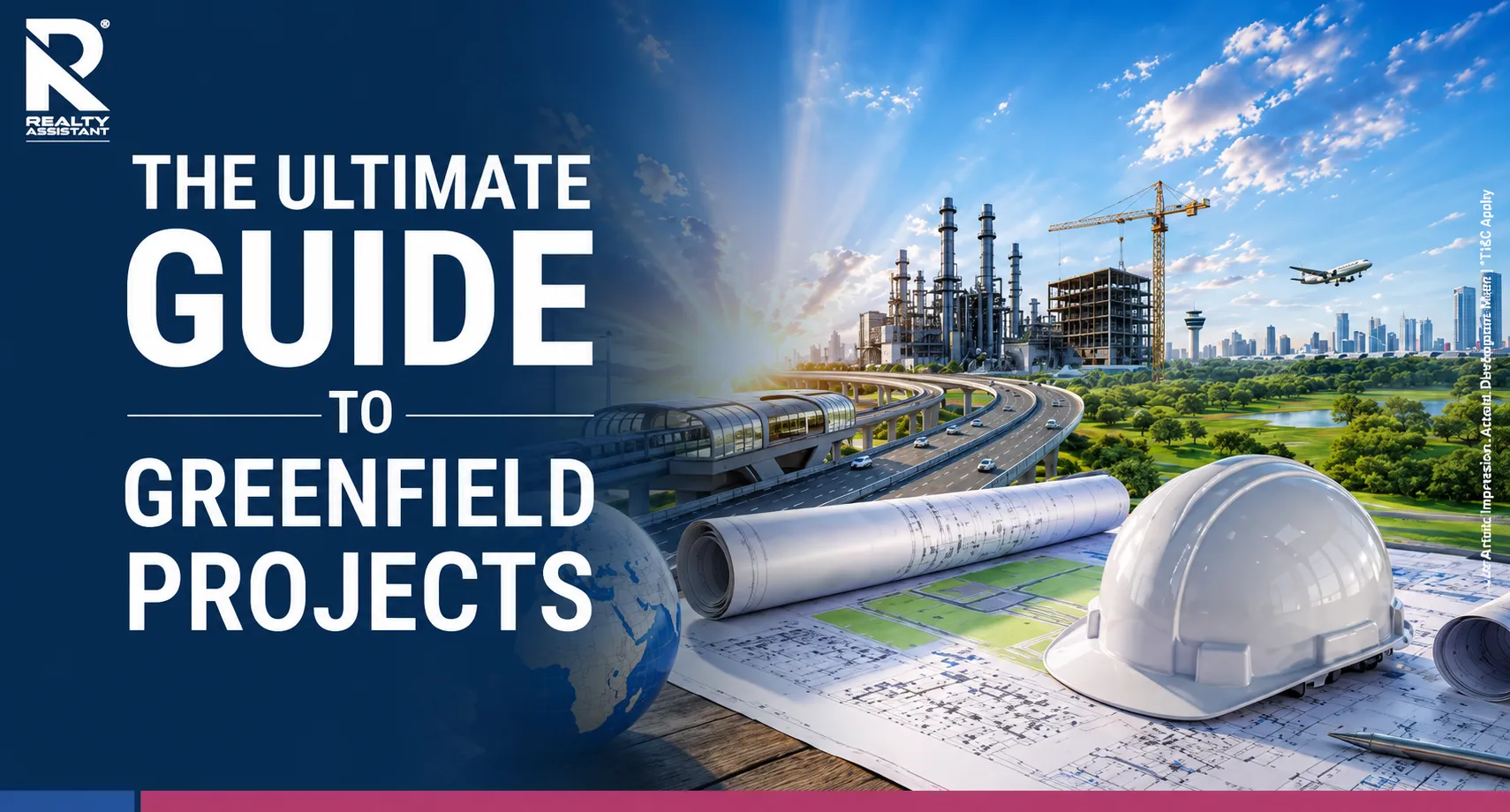
Imagine building the city of the future. There are no old factories to demolish, no outdated power grids to work around, and no toxic soil to remediate. You simply have a blank canvas.
That is the magic of a Greenfield project.
If you are an investor, buyer, or enterprise leader looking to scale, understanding the greenfield landscape is no longer optional—it is a critical part of the global development playbook. From hyper-connected smart cities to massive renewable energy hubs, the world’s most ambitious initiatives are breaking new ground on untouched land.
Here is exactly what you need to know about greenfield projects, why they are attracting trillions of dollars in investment, and the top five largest mega-developments happening right now.
What is a Greenfield Project?
In structural engineering, real estate, and business, a greenfield project is an initiative built from scratch in a completely undeveloped environment. Because the land has not been previously developed, teams are free from the constraints of existing buildings, legacy systems, or infrastructure.
What is a Brownfield Project?
This is the direct opposite of a "greenfield" project, which involves redeveloping land that has previously been built on, such as disused factories or outmoded office buildings. While brownfield sites often require complex remediation to remove volatile organic compounds (VOCs) and contaminated soil, greenfield sites offer a clean slate.
Greenfield Vs Brownfield Project
Greenfield and Brownfield Projects have some key differences:
Aspect | Greenfield | Brownfield |
Definition | Undeveloped land (never used before) | Previously developed land (used earlier) |
Location | Outskirts, rural, suburban areas | Urban or semi-urban areas |
Existing Structures | None | Old buildings or infrastructure present |
Infrastructure | Built from scratch | Already partially available |
Development Cost | High (roads, utilities, etc.) | Moderate (reuse existing facilities) |
Land Cost | Usually lower | Usually higher (prime locations) |
Project Start Time | Slower (approvals + setup) | Faster (ready base) |
Flexibility in Design | Very high | Limited (existing constraints) |
Environmental Issues | Minimal | Possible contamination/cleanup needed |
Examples | New township on farmland | Redevelopment of old factory into apartments |
The Advantages of Green (field)
- Unmatched Flexibility: Architects and planners have total freedom in the design and layout of the facility.
- Next-Gen Technology: Developers can seamlessly integrate the latest technologies, optimal workflows, and sustainable practices right from day one.
- Future-proofing: Master plans can easily provide well-planned expansions for future growth.
The Risks to Consider
- Steep Capital Costs: Land acquisition, investment, and starting infrastructure development from zero require massive upfront capital.
- Longer Schedules: Because you are building the underlying infrastructure (like roads, power, and water) alongside the project, lead times are significantly longer.
The Top 4 Greenfield Mega-Projects Globally (By Area)
To understand the sheer scale of modern greenfield development, you must look at the massive, planned cities and energy hubs currently reshaping the globe.
Here are the top five largest greenfield projects by area, ranging from visionary eco-cities to cautionary tales.
Rank | Project Name | Location | Estimated Area | Core Focus |
1 | Neom | Tabuk Province, Saudi Arabia | 26,500 sq km | Smart city, arcology, renewable energy |
2 | Western Green Energy Hub | Western Australia | 15,000 sq km | Green hydrogen & ammonia production |
3 | Dholera SIR | Gujarat, India | 920 sq km | Industrial smart city, tech, & solar power |
4 | New Clark City | Tarlac, Philippines | 94.5 sq km | Disaster-resilient government & sports hub |
NEOM
Launched in 2017, Neom is a sprawling planned city in northwestern Saudi Arabia designed to operate independently with its own tax and labor laws.
Project Overview
Category | Details |
Initiated By | Mohammed bin Salman (Crown Prince of Saudi Arabia) |
Year of Launch | 2017 |
Vision | Part of Saudi Vision 2030 |
Funding Source | Public Investment Fund (PIF), Saudi Arabia |
Estimated Cost | $500 billion+ (initial) |
Area | 26,500 km² (≈ size of Belgium) |
Planned Population | ~9 million people |
Location | Northwest Saudi Arabia (near Red Sea, Egypt & Jordan borders) |
Purpose
Goal | Details |
Economic Diversification | Reduce dependence on oil |
Global Positioning | Hub for technology, tourism, innovation |
Employment & Investment | Job creation and foreign investment attraction |
Western Green Energy Hub
WGEH is a proposal to design, construct, and operate a large-scale wind and solar power project.
A $70-100 billion one of the world’s largest renewable energy hubs for green hydrogen & ammonia in Western Australia, designed to generate massive renewable power, produce hydrogen and ammonia for global export.
Facing challenges related to environmental approvals, remote location logistics, and infrastructure development complexity.
Project Overview
Category | Details |
Initiated By | Private consortium (InterContinental Energy, CWP Global, Mirning Green Energy Ltd) |
Year of Proposal | Around 2021 |
Vision | Develop one of the world’s largest renewable energy hubs for green hydrogen & ammonia |
Funding Source | Private investment + international partnerships |
Estimated Cost | ~$70–100 billion |
Area | ~15,000 km² |
Planned Population | Not residential-focused (industrial energy project) |
Location | Western Australia (near Eucla region, Great Australian Bight) |
Purpose
Goal | Details |
Clean Energy Production | Generate massive renewable power (wind + solar) |
Green Hydrogen Export | Produce hydrogen and ammonia for global export |
Decarbonization | Help reduce global carbon emissions |
Economic Development | Boost renewable energy industry and exports |
Purpose
Goal | Details |
Clean Energy Production | Generate massive renewable power (wind + solar) |
Green Hydrogen Export | Produce hydrogen and ammonia for global export |
Decarbonization | Help reduce global carbon emissions |
Economic Development | Boost renewable energy industry and exports |
Dholera SIR
India’s first greenfield industrial smart city developed by Centre-State partnership of India and Gujarat. Strategically located about 100 kilometers from Ahmedabad, it represents a bold step toward transforming India’s urban and industrial landscape.
Entity | Stake | Contribution Type |
Central Government | 49% | Financial Investment |
Gujarat Government | 51% | Land Contribution |
Recently, the Ahmedabad-Dholera expressway was inaugurated on 31st March 2026. Which is directly boosting demand for Dholera SIR.
A $9 billion (Phase 1) a government funded global smart industrial city with Big Tech investors like TATA, ReNew, Torrent, PSMC and more in an area of 920 km² in Gujarat, India.
Project Overview
Category | Details |
Initiated By | Government of India & Government of Gujarat |
Key Authority | Dholera Industrial City Development Limited (DICDL) |
Year of Launch | 2009 (concept), major push after 2015 |
Vision | A global smart industrial city with sustainable infrastructure and economic growth. |
Funding Source | Government funding + PPP model + international investments |
Estimated Cost | ~$9–10 billion (Phase 1 approx.) |
Area | ~920 km² |
Planned Population | ~2 million people |
Location | Dholera (near Ahmedabad, along Gulf of Khambhat) |
Purpose
Goal | Details |
Industrial Growth | Create a global manufacturing and industrial hub |
Economic Development | Boost regional and national economy |
Smart City Development | Develop a planned, sustainable smart city |
Employment Generation | Create large-scale job opportunities |
New Clark City
A $14 billion government funded smart, green, and disaster-resilient metropolis in an area of 94.5 km².
Category | Details |
Project Name | New Clark City |
Initiated By | Bases Conversion and Development Authority (BCDA), Philippines |
Year of Launch | Around 2016 |
Vision | Develop a smart, green, and disaster-resilient metropolis |
Funding Source | Government funding + PPP (Public-Private Partnership) |
Estimated Cost | ~$14 billion (long-term development) |
Area | ~9,450 hectares (~94.5 km²) |
Planned Population | ~1.2 million people |
Location | Tarlac Province, Central Luzon, Philippines |
Purpose
Goal | Details |
Decongest Manila | Reduce overcrowding in Manila |
Disaster Resilience | Build a city safe from floods, earthquakes, and congestion |
Sustainable Development | Promote green infrastructure and eco-friendly planning |
Economic Growth | Attract investments and create business opportunities |
Government Hub | Serve as an alternative administrative center |
The Bottom Line for Prospects
Greenfield projects are not just about pouring concrete on empty land; they are about reimagining human potential. From India’s tech-heavy Dholera SIR to Australia’s clean-energy juggernaut at the Western Green Energy Hub, these developments offer unparalleled opportunities for businesses and investors willing to play the long game.
For a detailed greenfield investment overview, reach us here.
FAQs
Q. What is a Greenfield Project?
A. In structural engineering, real estate, and business, a greenfield project is an initiative built from scratch in a completely undeveloped environment. Because the land has not been previously developed, teams are free from the constraints of existing buildings, legacy systems, or infrastructure.
Q. What is a Brownfield Project?
A. This is the direct opposite of a "greenfield" project, which involves redeveloping land that has previously been built on, such as disused factories or outmoded office buildings.
Q. What are the advantages of a greenfield project?
A. Unmatched Flexibility, Next-Gen Technology and Betterment of the future.
Q. What are the challenges faced in a greenfield project?
A. Requirement of massive upfront capital. and Longer Schedules.
Q. What are the Top 4 Greenfield Projects?
A. NEOM, Western Green Energy Hub, Dholera SIR & New Clark City.
Q. What is NEOM?
A. Neom is a sprawling planned city in northwestern Saudi Arabia designed to operate independently with its own tax and labor laws, Launched in 2017.
Q. What is the Western Green Energy Hub?
A. Western Green Energy Hub is one of the world’s largest renewable energy hubs for green hydrogen & ammonia in Western Australia, designed to generate massive renewable power, produce hydrogen and ammonia for global export.
Q. What is Dholera SIR?
A. India’s first greenfield industrial smart city developed by Centre-State partnership of India and Gujarat. Strategically located about 100 kilometers from Ahmedabad, it represents a bold step toward transforming India’s urban and industrial landscape.
Q. What is New Clark City?
A. A government funded smart, green, and disaster-resilient metropolis in Philippines.