A few years ago, home décor in India was often treated as a finishing layer.
Buy the home first.
Decorate later.
That thinking is changing.
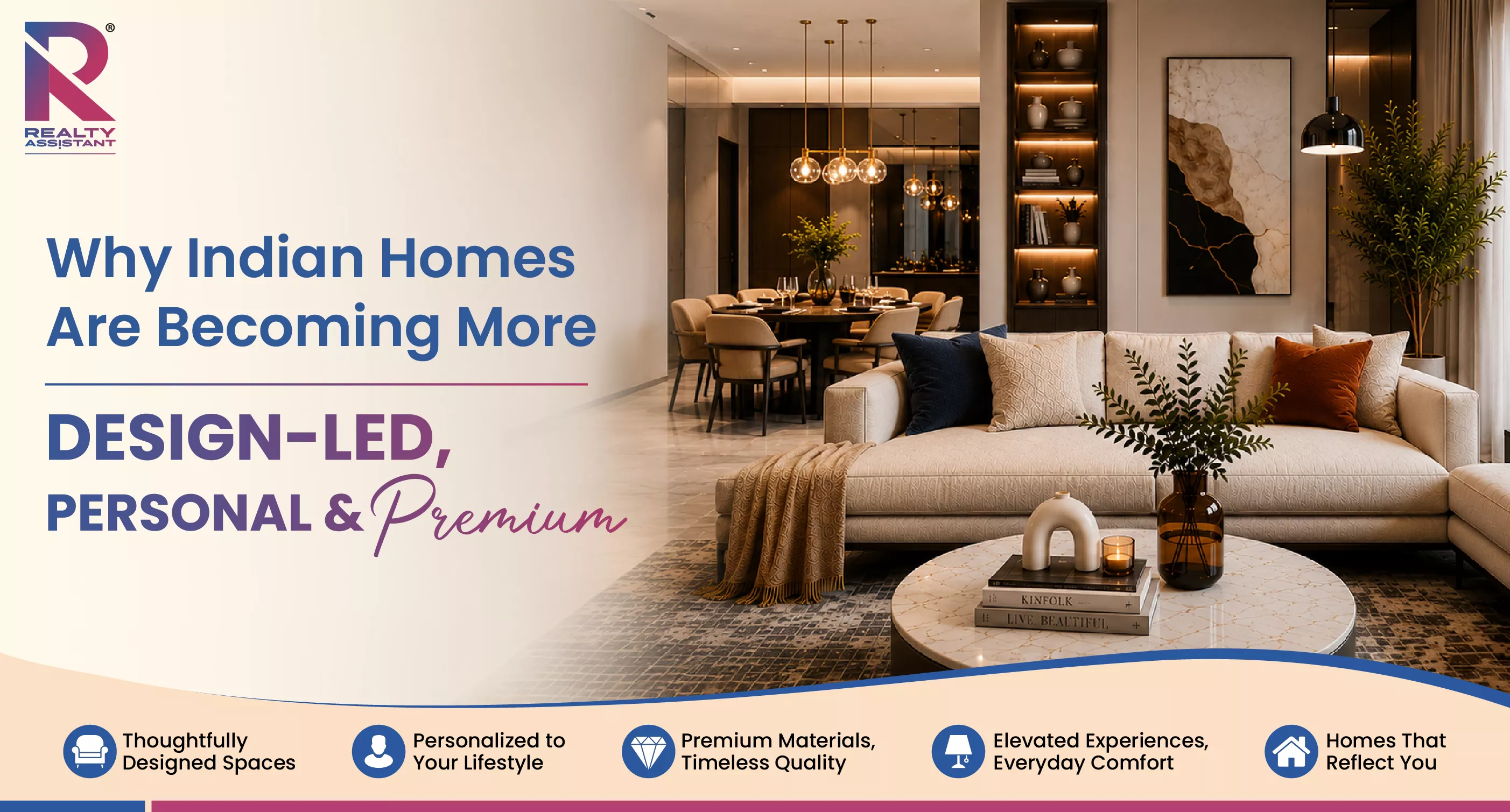
Today, many premium homebuyers are looking at interiors, furniture, lighting, finishes, balconies, façade design, wellness spaces, smart features, and clubhouse amenities before making a property decision. The home is no longer just a place to live. It is becoming a reflection of lifestyle, identity, comfort, and long-term aspiration.
That shift is one reason the Home Decor Market in India is growing strongly.
Industry estimates suggest India’s home décor market is expected to grow steadily over the next decade, supported by urbanisation, rising incomes, real estate development, organised retail, and e-commerce growth. North India also holds a large regional share, helped by higher urban concentration and Delhi-NCR’s premium housing activity.
But numbers only tell part of the story.
The bigger shift is emotional: Indian buyers are becoming more intentional about how their homes look, feel, and function.
Quick Summary
The Home Decor Market in India is growing as buyers move from basic furnishing to design-led living. Rising incomes, premium housing demand, e-commerce, smart home adoption, sustainable materials, and lifestyle-focused interiors are shaping how Indian homebuyers evaluate properties. For luxury buyers, décor trends now influence how they assess layouts, natural light, balconies, smart features, clubhouse amenities, and long-term lifestyle value.
Why the Home Decor Market in India Is Growing
The growth of the home decor market in India is not happening because people suddenly want more furniture.
It is happening because lifestyle expectations have changed.
Urban buyers are spending more time at home. Hybrid work has changed how people use bedrooms, balconies, dining zones, and study corners. Families want homes that support hosting, privacy, wellness, storage, entertainment, and personal expression.
At the same time, social media, design influencers, global luxury brands, and e-commerce platforms have made premium interior ideas easier to discover. A buyer in Noida, Gurugram, Lucknow, or Pune can now explore Italian marble finishes, Japandi furniture, sculptural lighting, sustainable décor, modular wardrobes, and smart automation before even visiting a project site.
The home is now being evaluated as a complete lifestyle experience.
That is why premium home interiors are no longer limited to ultra-rich buyers. They are becoming part of the decision-making process for upgrade buyers, NRIs, and luxury real estate investors.
From Décor to Design-Led Living
Earlier, décor often meant curtains, wall art, cushions, and furniture.
Now, design-led living goes deeper.
It includes how sunlight enters the living room, whether the balcony can support outdoor seating, whether the kitchen feels social, whether the bedroom has enough wardrobe space, and whether the clubhouse supports everyday lifestyle needs.
This is why many buyers looking at luxury apartments with premium interiors also evaluate the property’s layout, façade, lobby, amenities, and open spaces.
For example, someone considering luxury apartments with premium interiors may not only be attracted to the brand or address. They may also be thinking about how the home supports refined interiors, soft luxury, and lifestyle-led living.
This is where real estate decisions and home décor expectations now overlap.
Key Drivers Behind India’s Home Décor Boom
The Indian home décor industry is growing because multiple trends are working together.
Premium Housing Demand Is Changing Buyer Expectations
Premium housing buyers are no longer satisfied with basic layouts and standard finishes.
They want larger living areas, better balconies, elegant lobbies, smart features, natural lighting, better kitchens, and lifestyle amenities. This is especially visible among HNI buyers, NRI buyers, and families upgrading from mid-segment homes.
A luxury buyer may walk into a sample apartment and immediately evaluate wall finishes, flooring, ceiling height, air-conditioning provisions, lighting, furniture placement, and how easily the space can be customised.
This is why luxury apartment interiors now influence property perception.
Premium residences designed for modern living are often assessed not only for location, but also for privacy, views, arrival experience, and interior potential.
E-Commerce Has Made Décor More Accessible
One of the biggest shifts in the India home decor market is discovery.
Earlier, homeowners relied heavily on local furniture markets or interior designers. Now, online platforms allow buyers to explore décor styles, compare prices, order custom furniture, and experiment with looks.
This has encouraged more homeowners to invest in:
Category | Why It Is Growing |
Modular furniture | Useful for urban apartments and flexible layouts |
Lighting | Creates mood, depth, and premium feel |
Wall décor | Adds personality without major renovation |
Furnishings | Easy to refresh seasonally |
Smart home accessories | Improves convenience and control |
Sustainable décor | Appeals to conscious premium buyers |
The home furnishings market in India is also expected to grow steadily, supported by multifunctional furniture, premiumisation, compact urban homes, and rising online décor purchases.
Luxury Is Becoming Quieter and More Personal
Luxury décor in India is moving away from excessive ornamentation.
The new premium aesthetic is more restrained: warm woods, textured walls, natural stone, soft lighting, muted palettes, handcrafted pieces, and elegant furniture.
This does not mean homes are becoming plain. It means they are becoming more edited.
A well-designed luxury home now feels personal, calm, and layered rather than loud. The focus is on comfort, proportion, craftsmanship, and timelessness.
If you want to explore this design direction more deeply, our guide on Luxury Home Decor Trends 2026 explains how warm minimalism, wellness-led planning, natural materials, and subtle smart home features are shaping premium homes.
Smart Homes Are Influencing Interior Planning
Smart home features are no longer treated as futuristic add-ons.
They are becoming part of modern luxury home planning.
Buyers are looking at app-controlled lighting, smart locks, video door phones, automated curtains, climate control, security systems, and energy-efficient appliances. The best smart homes do not feel complicated. They make daily routines easier.
For example, a living room with layered lighting scenes can shift from family time to formal hosting without changing the furniture. A bedroom with smart curtains and climate control can feel more restful. A kitchen with better appliances and sensor lighting can improve everyday functionality.
This is why demand for luxury homes with smart features is rising among premium buyers.
Sustainability Is Becoming a Premium Choice
Eco-friendly décor is no longer a niche conversation.
Many buyers now prefer natural materials, low-VOC paints, energy-efficient lighting, reclaimed wood, organic fabrics, indoor plants, and durable furniture that does not need frequent replacement.
Sustainability in décor is not only about the environment. It is also about quality.
A home designed with natural materials often feels warmer, healthier, and more timeless. This aligns with the shift toward sustainable home decor trends and wellness-focused living.
Premium homebuyers are increasingly asking whether the property itself supports this lifestyle through green planning, ventilation, open areas, and energy-conscious amenities.
How Home Décor Trends Influence Luxury Real Estate Buying
Interior preferences are now influencing property shortlisting.
A luxury buyer may reject a property if the room proportions do not support premium furniture. A large living room may feel less valuable if there is poor natural light. A beautiful façade may lose appeal if the balcony is too narrow for real use.
This is why design-led buyers evaluate homes differently.
They look at:
Property Feature | Décor / Lifestyle Impact |
Ceiling height | Makes interiors feel more spacious |
Natural light | Improves mood and material appearance |
Balcony depth | Supports plants, seating, and outdoor living |
Wall lengths | Helps with art, panels, wardrobes, and consoles |
Kitchen layout | Impacts social living and functionality |
Smart features | Adds convenience and modern comfort |
Clubhouse amenities | Extends lifestyle beyond the apartment |
Façade design | Adds long-term visual identity |
This is especially relevant for buyers searching for 4 BHK luxury apartments or 5 BHK luxury residences, where lifestyle expectations are higher.
For example, 5 BHK luxury residences may appeal to buyers who want larger layouts, branded design, and a stronger lifestyle statement. Similarly, spacious luxury apartments for upgrade buyers may suit families looking for larger homes with community living and amenity-led comfort.
What Luxury Buyers Want in 2026
The luxury buyer in 2026 is more informed.
They are not only asking “How big is the home?” They are asking “How well can this home support my life?”
The answer often depends on design.
A premium homebuyer may want a living room that feels calm but impressive, a kitchen that supports hosting, bedrooms that feel private, bathrooms that feel spa-like, and balconies that create an indoor-outdoor connection.
The most important design preferences include:
- warm minimalism instead of cold luxury
- natural materials instead of synthetic shine
- multifunctional furniture for flexible living
- smart home design that feels effortless
- wellness corners, green views, and quiet spaces
- statement lighting and textured walls
- premium exterior design and modern façades
These are not just décor choices. They are lifestyle filters.
The Role of Living Rooms in India’s Décor Market
The living room remains the most important décor zone in Indian homes.
It is where families host guests, spend evenings, celebrate festivals, and express personal taste. Because of this, buyers often start their design journey with the living room.
The shift today is toward comfort with sophistication. Large sofas, layered lighting, textured rugs, art walls, statement coffee tables, and softer colour palettes are replacing stiff showroom-style interiors.
For room-specific inspiration, readers can explore living room décor ideas and adapt them to premium apartment formats.
A well-designed living room can make even a simple layout feel premium. But in luxury homes, the base architecture still matters. Good interiors need good proportions.
Why Premium Developers Are Paying More Attention to Design
As the interior design market in India grows, premium developers are responding.
Luxury projects now focus more on arrival experience, façade quality, sample apartment styling, landscape design, clubhouse interiors, lobby finishes, and smart amenities.
This is happening because buyers compare homes visually before they compare technical specifications.
A project with a strong design identity can stand out in a crowded market. But the best projects balance design with usability. A striking lobby is useful only if the home itself offers comfort, privacy, and practical planning.
For luxury buyers, the right question is not “Does it look premium?”
The better question is: Will this design still feel good to live with every day?
What This Means for Luxury Real Estate Investors
For investors targeting luxury homes, décor trends are more than lifestyle signals.
They indicate what future buyers and tenants may value.
Homes with flexible layouts, premium interiors, smart features, strong amenities, and modern façade design may have stronger appeal among upgrade buyers and NRIs. Properties that feel outdated in planning may need heavier renovation to stay competitive.
This is why investors should study design trends alongside location and pricing.
A luxury property is not only an asset. It is also a lifestyle product.
Final Thought
The Home Decor Market in India is growing because Indian buyers are rethinking what home means.
It is no longer just about ownership. It is about comfort, wellness, identity, flexibility, and long-term lifestyle value.
For luxury homebuyers, décor trends are useful because they help evaluate whether a property can support modern living. For investors, they reveal what premium buyers may expect in the future.
The smartest approach is simple: use décor trends as a lens, not a rulebook.
Choose homes that offer strong layouts, natural light, good proportions, thoughtful amenities, and enough flexibility to make the space truly yours.
That is where design-led living begins.