Buying your first office is a milestone for any business.
Whether you're moving out of a co-working space, expanding from a rented office, or setting up a permanent headquarters, the decision affects far more than your monthly expenses. It influences your team's productivity, your company's image, and even your long-term financial position.
That is why Buying Office Space for Small Business should never be based on price alone. The right office should support your operations today while giving your business room to grow tomorrow.
If you're evaluating office ownership, here are the most important factors to consider before making a decision.
Why More Small Businesses Are Considering Office Ownership
As commercial property markets evolve, small businesses are increasingly evaluating office ownership as part of their long-term growth strategy. Improved affordability, expanding commercial infrastructure, and greater availability of business-ready office spaces have made ownership a more practical option for many SMEs than in previous years.
Many SMEs and startups initially choose rented offices because they require less upfront investment. However, as businesses become more stable, many owners begin questioning whether continuing to pay rent makes financial sense.
Owning an office can provide predictable occupancy costs, create a long-term business asset, and reduce dependence on lease renewals.
If affordability is your biggest concern, it may be worth exploring affordable office ownership options through our Office Space at ₹4999 PSF guide, which explains how entry-level commercial ownership is becoming more accessible.
1. Start With Your Business Needs—Not Just the Budget
Every business operates differently.
A digital agency may need collaborative workstations, while a consultancy might prioritize private meeting rooms. Before comparing properties, define what your business actually requires.
Ask yourself:
- How many employees will use the office?
- Will clients visit regularly?
- Do you expect to hire more people within the next three to five years?
- Do you require parking or customer-facing visibility?
Buying slightly larger than your current requirement can often prevent another relocation within a few years.
2. Choose a Location That Supports Growth
An office location should work for both your employees and your customers.
Look for commercial areas that offer:
- Growing residential catchment
- Future infrastructure development
Markets such as Greater Noida West continue attracting businesses because of their expanding residential population and improving connectivity.
Growing commercial corridors supported by large residential catchments often provide better long-term business visibility, customer access, and future leasing demand than isolated office locations.
To better understand why businesses are increasingly considering this market, read our article on growing office demand in Greater Noida West.
3. Compare Renting and Owning Before Making a Decision
Many businesses focus only on today's monthly payment without considering long-term financial impact.
While renting offers flexibility, ownership creates a commercial asset that may appreciate over time and can potentially generate rental income if your business relocates in the future.
Instead of relying on assumptions, compare renting and owning office space to understand which option aligns better with your business goals and financial planning.
4. Evaluate the Commercial Ecosystem Around the Office
An office doesn't operate in isolation.
The surrounding commercial environment can directly influence convenience, employee satisfaction, and business visibility.
Look for locations with:
- Residential neighbourhoods
- Established commercial developments
A well-developed ecosystem often supports higher occupancy and stronger long-term demand.
Businesses also benefit from operating in locations where complementary services, daily consumer movement, and established commercial activity contribute to a more productive working environment.
5. Think Beyond Today's Price
The lowest-priced office isn't always the best investment.
Instead, evaluate the overall value by considering:
- Connectivity improvements
For buyers exploring entry-level office investment opportunities, understanding value rather than just price can lead to better long-term outcomes.
6. Check Whether the Office Is Business-Ready
Every month spent on interior work delays operations.
Many small businesses now prefer offices that require minimal setup before occupation.
Business-ready office spaces generally reduce:
- Initial capital expenditure
Operational readiness also enables businesses to begin serving clients, onboarding employees, and generating revenue more quickly after taking possession.
This allows companies to focus on running their business rather than managing lengthy office preparations.
7. Evaluate Long-Term Investment Potential
An office purchase isn't only about where you'll work today.
It's also about whether the asset can support your financial goals in the future.
Ask questions like:
- Will demand increase in this location?
- Can the office be leased if required?
- Is the surrounding area still developing?
- Are businesses actively moving into the region?
Reviewing surrounding infrastructure development, business occupancy trends, and future commercial activity can provide additional context when evaluating long-term office ownership opportunities.
These factors often influence both rental demand and long-term appreciation.
Where Can Small Businesses Find Business-Ready Office Opportunities?
Once you've completed your evaluation, the next step is comparing actual office inventory.
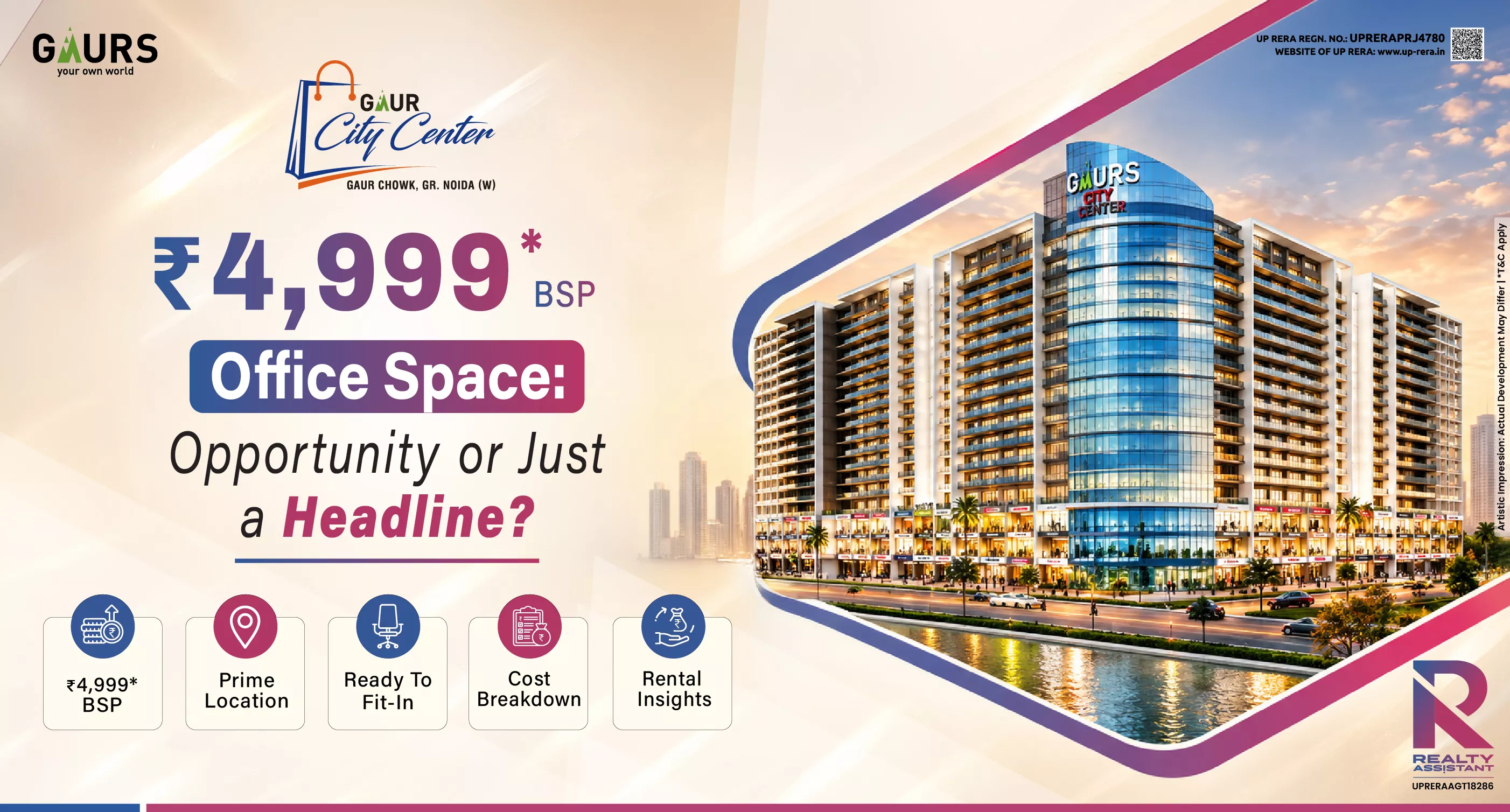
If you're looking for business-ready office units in Greater Noida West, consider reviewing the commercial office opportunities currently available within Gaur City Center.
Buyers can also compare available office inventory, pricing structures, and floor plans before shortlisting suitable office spaces.
Comparing multiple office formats, layouts, pricing structures, and operational readiness can help businesses identify spaces that align with both current requirements and future expansion plans.
Instead of making decisions based solely on brochures, you can:
- Explore available office spaces
- View office inventory in Greater Noida West
This practical approach helps determine whether the office matches both your operational needs and investment objectives.
Final Thoughts
Buying office space is one of the most important decisions a growing business can make.
Rather than focusing only on purchase price, evaluate how the office supports your operations, future expansion, employee convenience, and long-term financial goals.
The right office should help your business operate more efficiently today while becoming a valuable commercial asset for tomorrow.
If you're researching office ownership opportunities, begin by exploring available inventory, comparing locations, and understanding the long-term advantages of commercial ownership before making your final decision.
Continue your research with these helpful resources:
- Mr. 4999 - Discover the complete office ownership initiative and related investment insights.