Every commercial property promises "good returns."
But experienced investors know that Return on Investment (ROI) isn't determined by brochures or launch prices—it depends on how well a project performs over time.
Whether you're considering office ownership, a retail shop, or your first commercial investment, understanding the factors behind potential returns is far more valuable than focusing only on today's purchase price.
This Gaur City Center ROI Analysis explains the practical metrics, investment fundamentals, and commercial factors investors should evaluate before making a commercial investment decision.
What Does ROI Mean in Commercial Property?
Commercial ROI (Return on Investment) refers to the overall financial performance of a commercial property, considering rental income, capital appreciation, occupancy demand, ownership costs, liquidity, and long-term business value rather than purchase price alone.
Commercial ROI goes beyond capital appreciation.
Instead of relying on a single return metric, investors typically evaluate how a commercial property performs through rental income, occupancy demand, business usability, and long-term appreciation.
A well-performing commercial asset can create value through several channels:
- Long-term capital appreciation
- Commercial ecosystem growth
Rather than expecting quick gains, investors should evaluate whether the property can continue generating value throughout their investment horizon. A strong commercial property ROI is generally supported by consistent business demand, operational usability, and long-term market growth rather than short-term price movements.
What Influences Commercial Property Returns?
No two commercial projects perform identically because multiple ROI factors influence long-term investment performance. Returns are usually shaped by a combination of location, demand, accessibility, and the overall quality of the commercial environment.
Some of the most important factors include:
Strategic Location
Properties located within established residential catchments often benefit from stronger business demand, higher occupancy, and improved long-term leasing potential.
Business Activity
Commercial developments supporting offices, retail outlets, restaurants, and daily services generally attract more consistent visitor movement.
Connectivity
Easy access through major roads and surrounding infrastructure improves business convenience while supporting future commercial demand.
Developer Track Record
Projects delivered by experienced developers often inspire greater buyer confidence and long-term market acceptance. Over time, these characteristics may also contribute to stronger commercial asset performance when supported by favourable market conditions.
How Investors Evaluate ROI in Commercial Property
Experienced investors rarely rely on a single return metric. Instead, they evaluate commercial property performance using multiple indicators before making an investment decision.
They commonly assess:
- Rental yield potential based on expected leasing demand
- Long-term capital appreciation supported by infrastructure and market growth
- Occupancy trends within the commercial ecosystem
- Vacancy risk and tenant retention potential
- Liquidity and resale demand
- Operational usability for businesses
- Total ownership costs, including maintenance and operating expenses
Rather than focusing only on projected returns, investors compare these factors together to understand whether a commercial asset aligns with their financial objectives and investment horizon.
Common ROI Mistakes First-Time Investors Make
Many first-time commercial investors focus heavily on launch pricing while overlooking factors that influence long-term returns.
Common mistakes include:
- Buying based only on price
- Ignoring surrounding business activity
- Overlooking occupancy demand
- Not evaluating future infrastructure
- Assuming projected rental returns are guaranteed
- Ignoring maintenance and ownership costs
Evaluating commercial fundamentals alongside pricing often provides a more balanced investment decision.
Commercial ROI Checklist Before Investing
Before investing in commercial property, review:
Evaluating Office Investment Returns
Investors evaluating office investment returns generally compare occupancy demand, rental potential, operational readiness, long-term business growth, and the ability to attract quality occupiers before estimating future performance.
When evaluating office investments, consider:
- Expected occupancy demand
- Long-term ownership benefits
For a broader understanding of office investment strategies, our detailed office investment guide explains how investors compare commercial office opportunities across Greater Noida West.
Retail and Office Investments Follow Different Return Patterns
Although both asset classes belong to commercial real estate, their return drivers differ.
Office Investment | Retail Investment |
Driven by business occupancy | Driven by customer footfall |
Suitable for SMEs and professionals | Suitable for retail brands and franchises |
Stable operational demand | Visibility plays a larger role |
Rental demand from businesses | Rental demand from retailers |
Business continuity focused | Consumer spending focused |
Understanding these differences helps investors align purchases with their financial objectives.
How Ownership Can Influence ROI
ROI is also affected by how you choose to occupy commercial space.
Businesses paying rent for several years often compare that recurring expense against owning a commercial asset.
Ownership may provide several advantages that influence office ownership returns over the long term:
- Predictable occupancy costs
- Potential leasing opportunities
- Future resale flexibility
If you're still evaluating this decision, our comparison of renting versus owning office space explains the financial implications in greater detail.
Why Commercial Ecosystem Matters
Commercial returns rarely depend on an individual office alone.
Projects located within active mixed-use developments often benefit from:
- Continuous visitor movement
A healthy commercial ecosystem can contribute to stronger occupancy and improved long-term asset performance.
Commercial developments supported by consistent office occupancy, retail activity, and residential footfall are often better positioned to sustain long-term rental demand and commercial asset value.
Is Gaur City Center Worth Evaluating?
Every investor has different priorities.
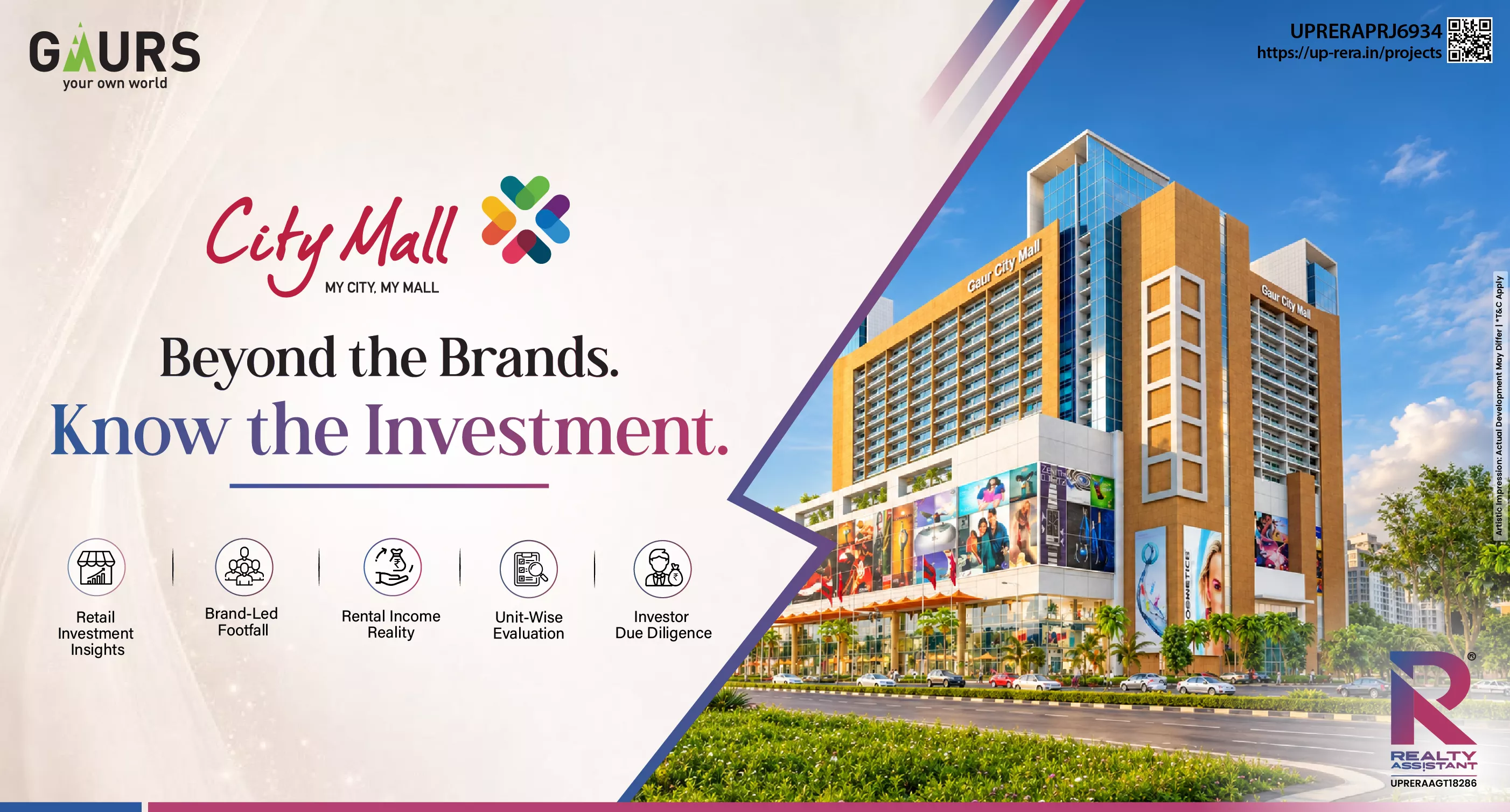
Investors evaluating Gaur City Center typically compare its location, commercial ecosystem, office inventory, accessibility, surrounding residential catchment, and long-term business demand before estimating potential returns.
Some focus on rental income, while others prefer long-term appreciation or business ownership.
If you're assessing investment potential in 2026, reviewing the project's location, office inventory, surrounding infrastructure, commercial ecosystem, and other investment fundamentals provides a more complete picture than relying on price alone.
For a broader perspective, you may also explore our overall investment outlook covering whether Gaur City Center remains a practical commercial investment in 2026.
Where Can Investors Review Available Inventory?
After understanding ROI factors, the next logical step is comparing actual commercial inventory.
If you're interested in evaluating commercial units at Gaur City Center, you can:
- Explore Gaur City Center office spaces
- Compare commercial configurations
- Request the latest pricing
- Access the complete Gaur City Center property overview
Reviewing actual inventory alongside your investment goals helps create a more informed purchase decision.
Comparing office sizes, floor plans, pricing structures, and operational readiness can further help investors identify commercial units that align with both business requirements and long-term investment objectives.
Final Thoughts
Commercial ROI is influenced by far more than the initial purchase price. Long-term commercial asset value is often shaped by location quality, business demand, occupancy trends, infrastructure development, commercial ecosystem, ownership strategy, and operational usability.
Rather than searching for the "highest return," investors often achieve better outcomes by choosing commercial assets supported by strong market fundamentals.
Reviewing historical market trends, commercial demand, and future infrastructure development can provide additional context when evaluating long-term commercial ROI.
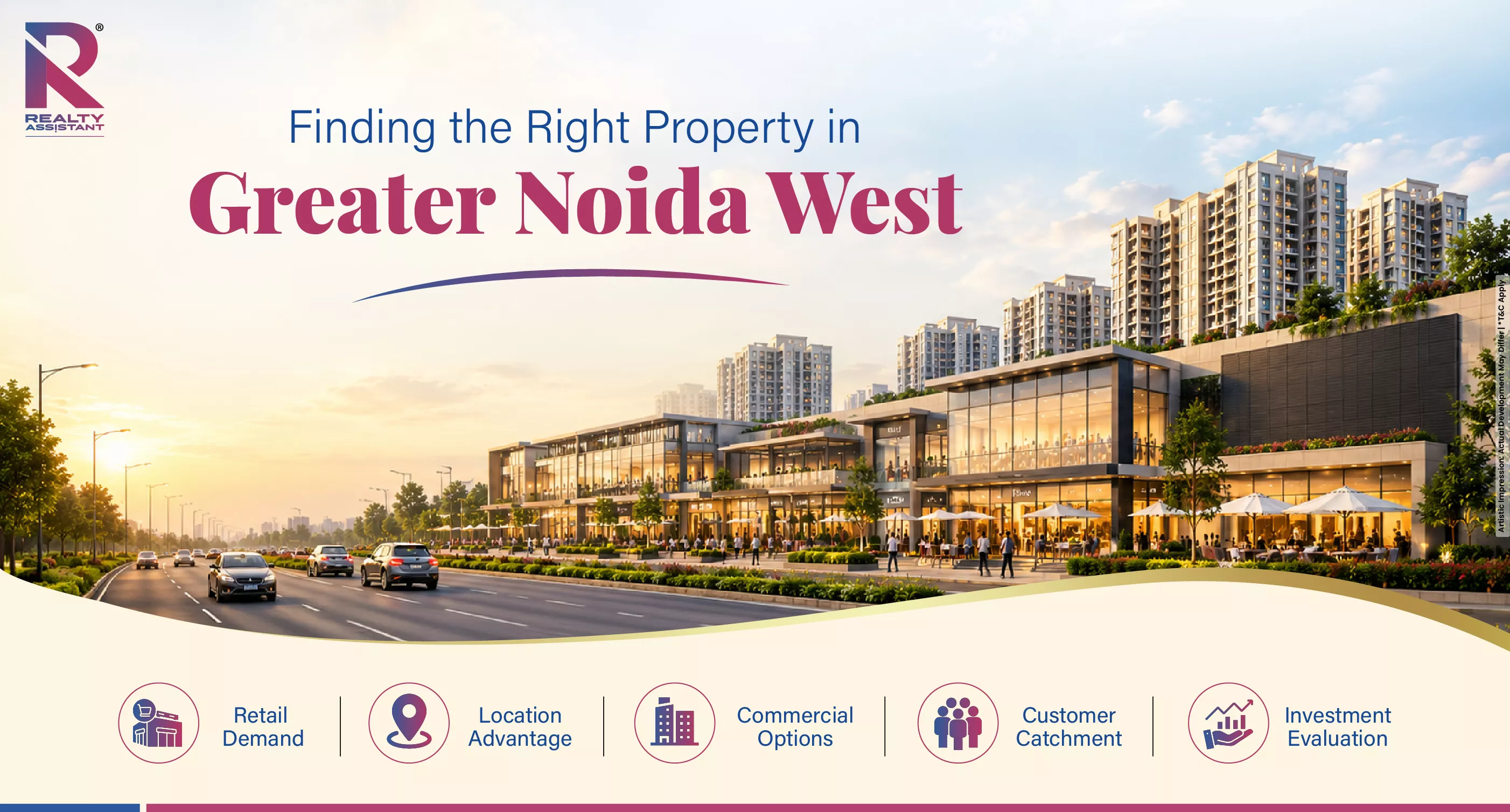
If you're comparing office or retail opportunities in Greater Noida West, reviewing available inventory, commercial configurations, and local business activity can help you make a more informed investment decision.
Continue your commercial investment research:
Office Investment in Greater Noida West — Learn commercial office investment insights and practical office investment strategies.
Commercial Property in Greater Noida West Investment Guide — Understand broader commercial market trends before investing.
Renting vs Owning Office Space — Compare the financial benefits of owning an office and the cost comparison between renting and buying.
Is Gaur City Center a Good Investment in 2026? — Explore the project's overall investment outlook and investment potential in 2026.
Gaur City Center Property Page — Review available office inventory, compare layouts, and request project information.